
In the realm of high-end interior architecture, true luxury is defined by the absence of compromise. When discerning homeowners and top-tier designers curate spaces of distinction, mass-produced textiles are quickly discarded in favor of custom rugs. To commission a bespoke rug is to participate in one of the world's oldest artisanal traditions, translating centuries of weaving heritage into a contemporary expression of personal style.
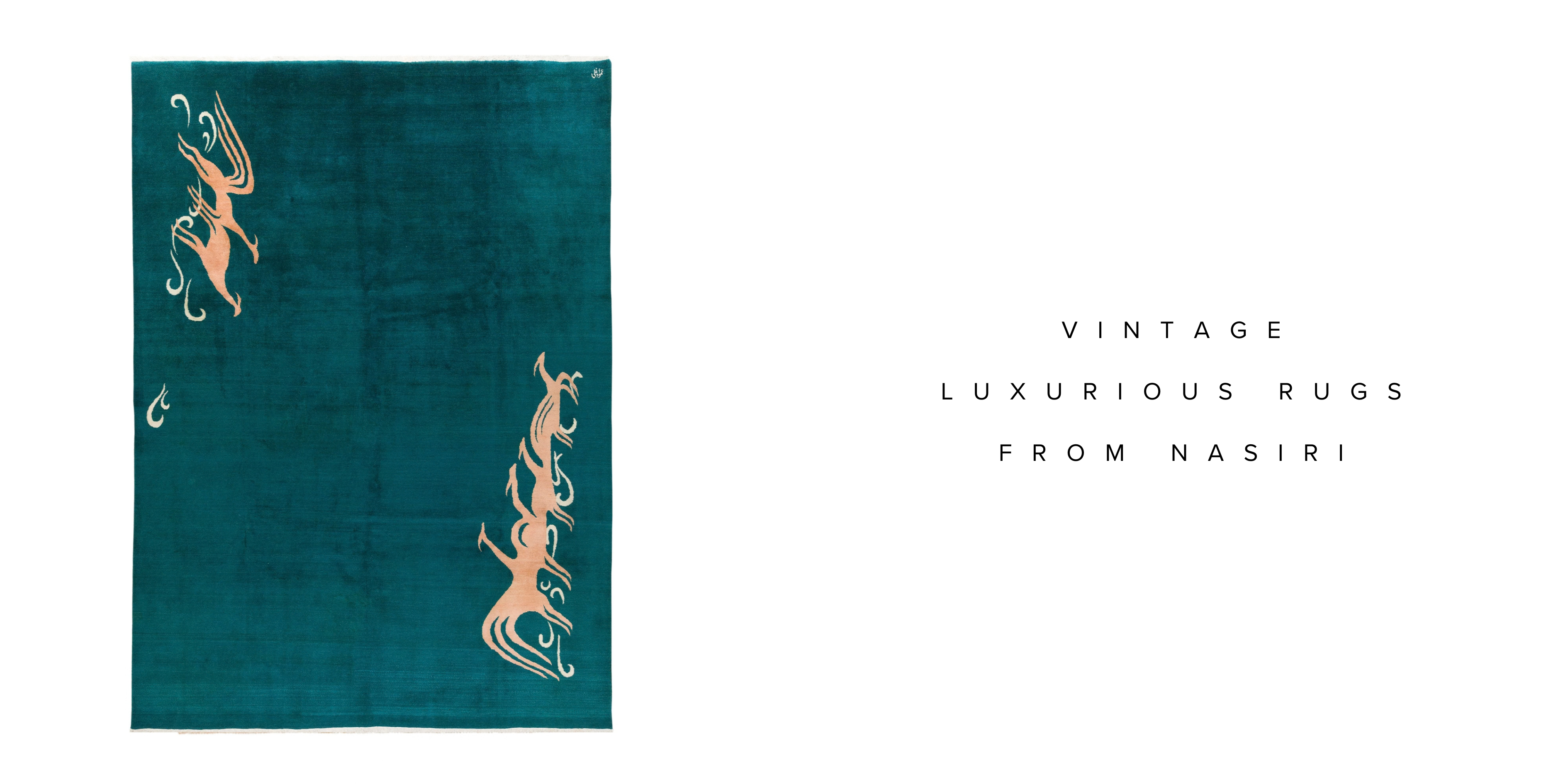
But what exactly elevates a custom rug from a mere floor covering to an investment-grade piece of functional art?
This exhaustive guide deconstructs the world of bespoke luxury rugs. From the microscopic architecture of a hand-tied knot to the financial longevity of heirloom textiles, we reveal why a custom creation from NASIRI Carpets is the ultimate foundational asset for your home.
Are custom rugs a good investment? Yes. High-quality, hand-knotted custom rugs made from natural fibers (wool and silk) have a lifespan of 50 to 100+ years. Unlike machine-made rugs that degrade, bespoke rugs develop a patina and hold or increase their value over time.
What are the different types of rug knots? The two primary knots in luxury bespoke weaving are the asymmetrical (Persian) knot, ideal for fluid, intricate, curved designs, and the symmetrical (Turkish) knot, renowned for its incredible durability and structural integrity.
How are custom rug colors chosen? Custom rugs utilize either natural (vegetal) dyes for a nuanced, organic finish with a subtle abrash (color variation) or Swiss chrome dyes for hyper-vibrant, uniform Pantone matching.
Why choose hand-spun over machine-spun yarn? Hand-spun yarn retains its natural lanolin and twists irregularly, allowing it to absorb dye with stunning variations in depth, giving the final custom rug a luminous, three-dimensional soul.
To understand the value of a custom luxury rug, one must first understand its lineage. The history of the carpet dates back millennia. Originally woven by nomadic tribes to insulate tents against harsh winters, these textiles evolved into symbols of immense wealth and power, gracing the floors of royal palaces across the Persian, Ottoman, and Mughal empires.
Today’s custom rug industry marries this ancient pedigree with modern interior design. When you commission a bespoke rug, you are utilizing the exact same hand-looming techniques developed over 2,500 years ago. No machines, no automated printing—just raw natural fibers, meticulously dyed and knotted by human hands. It is the ultimate antidote to the modern era of disposable, "fast" decor.
The durability, resolution, and texture of your custom rug depend entirely on the architecture of the knot. At NASIRI Carpets, our master artisans are fluent in the world's most intricate weaving techniques.
| Knot Type | Alternative Name | Structural Technique | Best For Custom Design Styles |
|---|---|---|---|
| Asymmetrical Knot | Persian Knot(Senneh) | Yarn is wrapped around one warp thread and passed under the adjacent warp thread. | High-resolution, hyper-detailed, flowing organic patterns, and curvilinear floral motifs. |
| Symmetrical Knot | Turkish Knot(Ghiordes) | Yarn is passed over two adjacent warp threads, pulled through, and wrapped around both. | Exceptionally durable designs, bold geometrics, and highly structural modern flatweaves. |
| Tibetan Knot | Loop Knot | Yarn is looped around a temporary rod placed across the warp, then cut to create the pile. | Plush, contemporary textures, modern minimalist designs, and thick pile heights. |
Expert Insight: When specifying a bespoke area rug, the knot density—measured in Knots Per Square Inch (KPSI)—determines the rug's clarity. A modern, abstract color-block rug may only require 60-80 KPSI, while a custom rug replicating a historic 17th-century hunting motif may require upwards of 300 KPSI, taking over a year to complete.
The journey of creating custom rugs by NASIRI is a masterclass in slow, intentional craftsmanship. A single rug passes through dozens of expert hands before it reaches your floor.
The process begins with your vision. Our designers translate your inspiration—a fabric swatch, architectural blueprint, or fine art piece—into a highly detailed Computer-Aided Design (CAD) map. Every single pixel on this map represents a single knot that will be tied by the weaver.
Raw, high-altitude New Zealand or local sheep's wool is cleaned and "carded" (combed) to align the fibers. We champion hand-spun yarn. While machine-spun yarn is perfectly uniform, hand-spun yarn has microscopic variations in tension. These variations are the secret to creating rugs that feel alive.
The yarn is submerged in massive vats of boiling dye. Whether we are using natural indigo for deep blues, madder root for rich reds, or precision chrome dyes to match a specific contemporary paint chip, this step locks in the rug's aesthetic DNA.
The foundation of the rug is established by stringing vertical threads (the warp) tightly across a massive vertical loom. The tension must be mathematically perfect; a millimeter of error will result in a warped, crooked rug.
Working from the CAD "map" (traditionally called a talim), artisans sit at the loom tying thousands of individual knots daily. They use a heavy comb to pack each row of knots down tightly, ensuring the rug's dense structural integrity.
Once cut from the loom, the rug undergoes a rigorous washing process. It is flooded with fresh water and agitated using wooden paddles. This step removes stray fibers, softens the wool, and creates the signature luminous sheen that high-end custom rugs are famous for.
Finally, the rug is meticulously sheared by hand to create a perfectly even pile height. The edges are bound (overcast) to prevent fraying, completing the masterpiece.
When considering all about custom rugs you should know, one must address the financial aspect. A bespoke rug carries a higher initial price point than a machine-made alternative, but the long-term economics strongly favor the custom route.
By commissioning a hand-knotted bespoke rug, you are purchasing an asset. Because these rugs contain no glues or synthetic plastics, they do not suffer chemical breakdown. Like fine leather or hardwood, they develop a coveted patina, growing softer and more visually complex over decades.
The distinction of a NASIRI custom rug lies in the microscopic properties of our sourced materials.
The Lanolin Advantage: We use high-altitude wool that retains its natural lanolin (wool wax). This natural coating makes the rug inherently stain-resistant and moisture-repellent. When wine spills on a high-lanolin custom wool rug, it pools on the surface rather than immediately soaking in.
The Tensile Strength of Silk: We incorporate pure mulberry silk for design accents. Silk is visually delicate and highly reflective, yet it boasts a tensile strength rivaling steel wire of the same diameter, allowing for incredibly fine, razor-sharp design details.
Mohair and Alpaca: For clients seeking extreme tactile luxury, we introduce exotic fibers like Mohair. Sourced from the Angora goat, Mohair provides a halo-like texture, incredible warmth, and a subtle, pearlescent glow.
Standard rugs force your room to conform to the textile. Custom rugs force the textile to conform to the room's architectural intent.
In sprawling, open-plan modern architecture, placing a standard rug often creates a "floating island"—a small patch of texture lost in a sea of hardwood or concrete. A custom rug allows you to scale the textile so that it reaches within 12 to 18 inches of the walls, completely altering the acoustic dampening of the room and visually warming the vast space.
In heritage homes with grand hearths, floor-to-ceiling radiators, or intricate built-in library cabinetry, a standard rug will awkwardly fold or bunch. Custom rug manufacturing allows for precision "cut-outs" where the rug is literally woven to wrap around architectural impediments flawlessly, creating a seamless, integrated aesthetic.
To protect your investment and ensure your bespoke piece reaches its 100-year potential, strict adherence to professional care guidelines is required.
Vacuuming Protocol: Vacuum weekly without a beater bar. The rotating brush of a standard vacuum pulls at the hand-tied knots, causing premature wear. Use suction-only attachments.
Climate Control: Natural fibers need to breathe. Avoid placing your custom rug in damp, non-climate-controlled environments like basements, which can introduce dry rot to the cotton warp foundation.
The Submersion Wash: Every three to five years, your rug must undergo a professional rug cleaning service. It must be fully submerged in water and hand-washed. Never allow a "dry cleaner" to use harsh chemicals or steam-clean a bespoke hand-knotted rug, as this strips the vital lanolin and can cause dye bleeding.
Q: Can I mix different pile heights in a single custom rug? A: Yes. "Carving" or mixing pile heights is a signature of modern luxury. We can weave a dense, flat kilim background and introduce raised, high-pile silk geometric patterns that sit a quarter-inch above the foundation, providing a stunning tactile experience.
Q: How do you ensure the colors will match my room exactly? A: We never rely on digital screens for color matching. We provide a physical "strike-off"—a small, hand-woven sample of your exact rug—for you to view in your room's specific lighting conditions before full production begins.
Q: Is it ethical to buy hand-knotted rugs? A: At NASIRI Carpets, ethical production is our cornerstone. Hand-knotted bespoke rugs represent the antithesis of sweatshop labor. They are crafted by highly skilled, fairly compensated adult artisans preserving their cultural heritage in safe, traditional environments.
A custom rug is not simply an interior design purchase; it is a profound commitment to artistry, sustainability, and architectural perfection. It is the thread that ties a room together, holding the memories, footsteps, and history of a home for generations to come.
At NASIRI Carpets, we specialize in the extraordinary. From translating a contemporary abstract painting into a glowing silk-and-wool tapestry, to engineering a massive 20x30 foot foundation for a luxury estate, our capabilities are limited only by your imagination.
Refuse the limitations of mass production. Elevate your environment with a masterpiece crafted exclusively for you. Explore our extensive capabilities, review our portfolio, and speak with a dedicated NASIRI design specialist today to commence the creation of your bespoke custom rug.
Talk to a Sales