
Finding the exact foundation for a room is often the defining moment in luxury interior design. When standard dimensions fall short, or pre-existing patterns clash with your curated aesthetic, custom rugs offer the ultimate architectural solution. A bespoke rug is far more than a floor covering; it is a foundational piece of art, meticulously hand-crafted to align with your exact specifications, spatial geometry, and design vision.
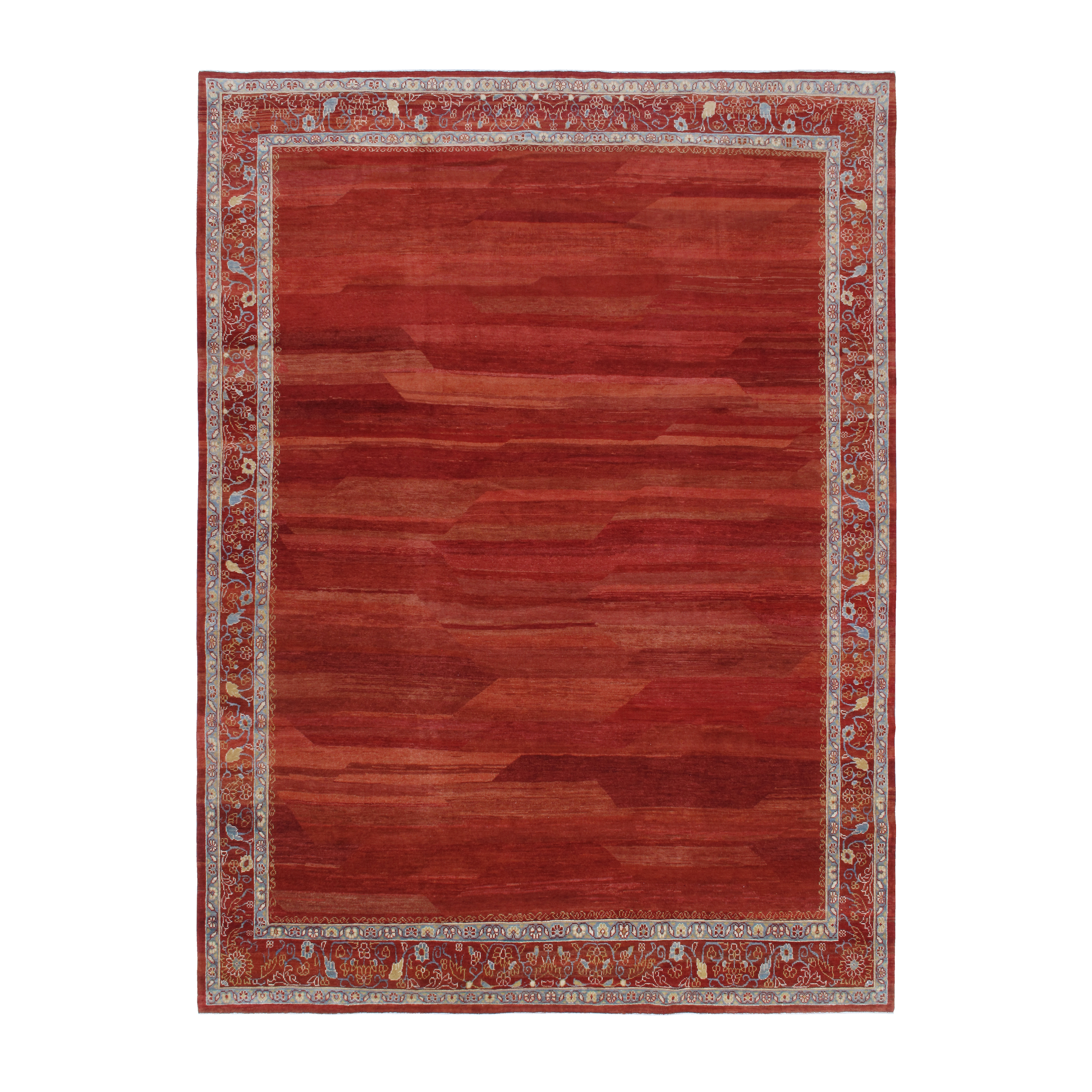
For high-end interior design projects, the rug dictates how a space feels, flows, and functions. Whether you are an architect sourcing for a sprawling commercial lobby or a homeowner commissioning an heirloom piece, this exhaustive guide details everything you need to know about materials, sizing, weaving techniques, and the bespoke design process at NASIRI Carpets.
What is a custom rug? A custom rug is a bespoke textile made to order, allowing the buyer to dictate exact dimensions, shape, color palette, material composition, and pattern. It is woven from scratch rather than pulled from existing inventory.
How long does it take to make a custom rug? Depending on the size, material, and knot density, a hand-knotted custom rug typically takes between 12 to 24 weeks to complete, encompassing design rendering, strike-off approval, and final weaving.
What is a "strike-off" in rug design? A strike-off is a small physical sample (usually 1x1 ft or 2x2 ft) woven on the loom before full production begins. It allows the client to verify exact color matching, texture, and pattern scale in their own lighting conditions.
Are custom rugs more expensive? While the upfront cost is higher than mass-produced alternatives, high-quality bespoke rugs offer superior longevity. A meticulously crafted wool rug can last generations, making the cost-per-year-of-use significantly lower.
Standard rug sizes (such as 8x10 or 9x12) often force compromises. You may find a design you love, only to realize the dimensions leave your dining chairs scraping against the floor, or the colors clash subtly with your upholstery.
Commissioning custom luxury rugs allows you to break free from these limitations.
Spatial Precision: Rooms with asymmetrical fireplaces, unique built-ins, or curved conversation pits demand rugs tailored to their specific geometry. A custom shape ensures your furniture is perfectly anchored.
Color Cohesion: Ready-made pieces rarely match a complex palette flawlessly. Custom dyeing allows artisans to match exact Pantone codes, fabric swatches, or fine art in the room.
Elevated Functionality: In open-concept spaces, a bespoke rug acts as a visual boundary, defining dining, lounging, or working zones without the need for physical walls.
The soul of any exceptional custom rug lies in its raw materials. The fiber dictates the piece's durability, texture, light-reflective qualities, and lifespan. At NASIRI, we prioritize premium, natural fibers paired with natural dyes to ensure heirloom quality.
The NASIRI Approach: One of the most sought-after techniques in luxury design is the wool and silk blend. By utilizing a wool foundation for durability and silk for the pattern, the rug gains a three-dimensional depth, catching the light and shifting in appearance depending on your vantage point in the room.
The construction method is just as critical as the material. How a rug is woven determines its texture, flexibility, and longevity.
The absolute pinnacle of luxury rug making. Artisans tie individual knots onto the warp threads (the vertical foundation) of the loom. A single hand-knotted rug can contain millions of individual knots. Because the fringe is a structural extension of the warp threads, the rug is incredibly secure. These pieces often last 50 to 100+ years, mirroring the historic pedigree of the traditional Persian carpet.
Unlike a knotted rug, flatweaves are created by intertwining the warp and weft threads without piling. This results in a thin, highly durable, and often reversible rug. Kilim and Soumak techniques are ideal for spaces requiring clean architectural lines, or beneath dining tables where chairs need to slide effortlessly.
For projects with tighter timelines, hand-tufted rugs offer a faster alternative. Instead of tying knots, artisans use a specialized tool to punch yarn through a canvas backing, which is then sealed with latex. While beautiful, they do not possess the multi-generational lifespan of hand-knotted pieces.
The most common mistake in interior design is undersizing the rug. A perfectly scaled custom rug makes a space feel expansive and intentional, while an undersized rug makes a room feel fragmented and cramped.
When investing in a custom rug, you are engaging in a collaborative, highly communicative artistic process. Here is what to expect from concept to installation.
Discovery & Conceptualization: The process begins by decoding your space. You provide architectural blueprints, fabric swatches, paint chips, or inspirational artwork. We discuss room traffic, emotional tone, and lifestyle requirements to select the perfect materials.
Digital Rendering (CAD): Our design team translates your vision into a precise Computer-Aided Design (CAD) file. This digital mockup allows you to view the exact pattern scale and color mapping before a single thread is dyed.
The Strike-Off: Before full production begins, our weavers create a small physical sample (the strike-off). You can place this sample in your space to observe how the custom-dyed yarns interact with your room's natural and artificial lighting.
Looming & Weaving: Upon your approval, the full batch of yarn is dyed, the loom is strung, and the meticulous weaving process begins. Depending on size and complexity, this stage can take several months.
Finishing & Delivery: Once complete, the rug is cut from the loom, traditionally washed to lock in the colors and soften the fibers, sheared to the precise pile height, and securely bound at the edges before final delivery.
Understanding the pricing variables of bespoke area rugs allows you to optimize your investment without sacrificing quality. The final cost is driven by three primary factors:
Knots Per Square Inch (KPSI): KPSI measures the density and resolution of the rug. A rug with 300 KPSI requires exponentially more labor than a rug with 80 KPSI. Higher KPSI is necessary for intricate, curving, hyper-detailed patterns, while a lower KPSI beautifully suits bold, modern geometrics.
Material Selection: Premium fibers command a higher price. Authentic mulberry silk and high-grade New Zealand wool cost more than synthetic alternatives, but they guarantee the rug will age gracefully rather than deteriorate over time.
Size and Scale: Pricing is generally calculated by the square foot. Oversized pieces (e.g., larger than 12x15) often require specialized, massive looms and intricate logistical handling, which factors into the final quote.
The secret unseen power of custom rugs is that high-quality natural fibers actually improve with age, provided they are maintained correctly.
Routine Vacuuming: Vacuum weekly using suction only. Avoid aggressive beater bars, particularly on silk or flatweave rugs, as they can pull and shred the fibers over time.
Rotation: Rotate your rug 180 degrees every six months to ensure even wear patterns and uniform exposure to sunlight.
Spill Management: Never aggressively scrub a spill. Blot immediately with a clean, undyed cotton cloth to absorb moisture.
Professional Cleaning: Even with meticulous care, fine rugs require expert attention. We recommend utilizing professional rug services every three to five years. A hand-knotted rug should be professionally hand-washed and fully submerged—never subjected to standard chemical dry cleaning, which strips natural lanolin from the wool.
A custom rug is the ultimate expression of personal style and architectural intent. It transforms a beautifully decorated room into an emotionally resonant, perfectly calibrated environment.
By prioritizing natural materials, masterful weaving techniques, and exact sizing, NASIRI Carpets ensures your vision is translated into an enduring work of art. Connect with our design team today to request your custom CAD rendering and begin the journey toward your bespoke masterpiece.
Talk to a Sales