
In the sophisticated world of luxury interior design, the floor is the "fifth wall." It is the largest uninterrupted surface in any room, and how you choose to cover it dictates the acoustic resonance, the thermal comfort, and the visual hierarchy of the space. While ready-made textiles serve a purpose in mass-market decor, high-end residential and commercial architecture demands a tailored approach. Enter the world of custom rugs.
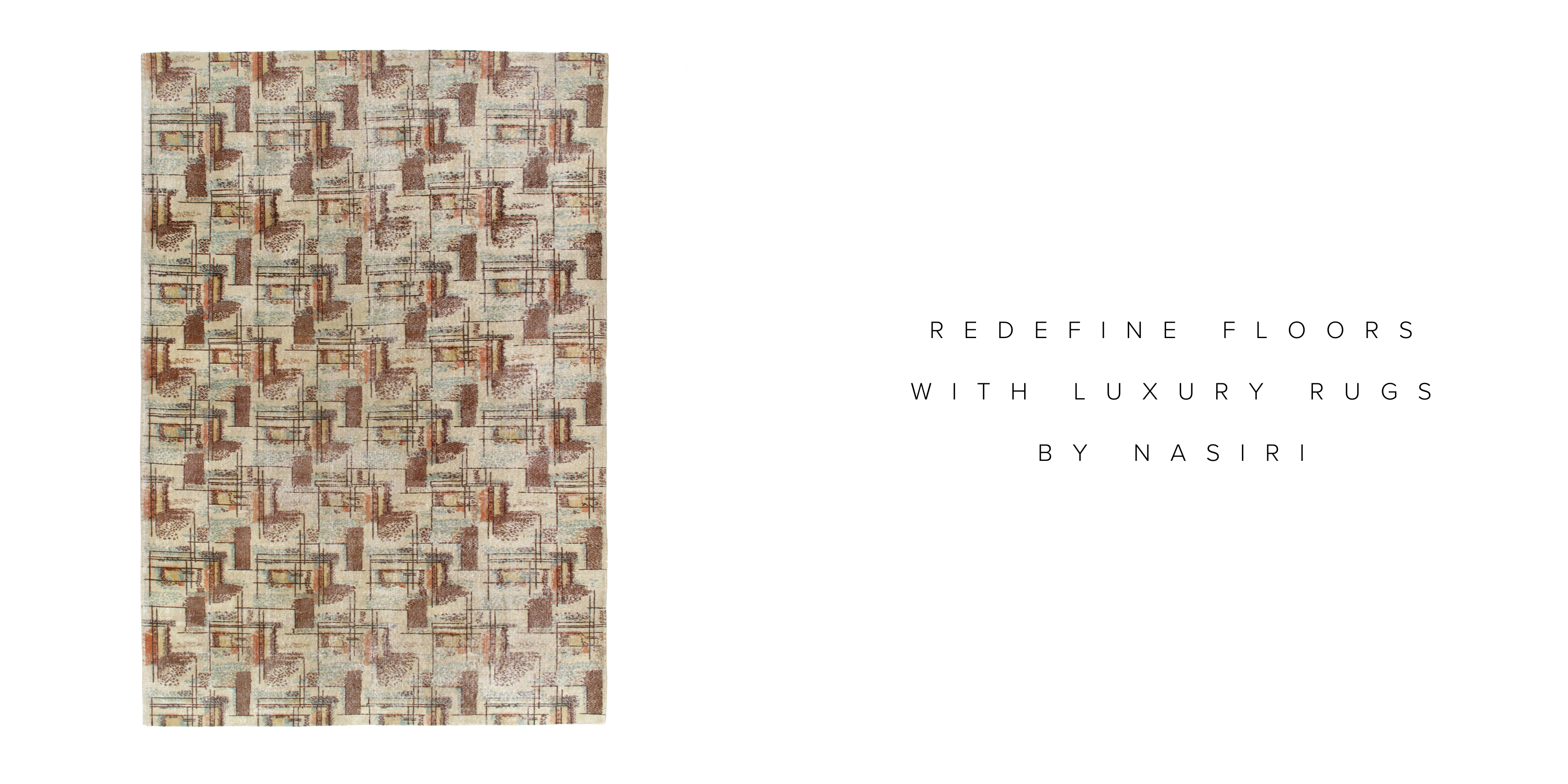
Commissioning a bespoke custom rug is the ultimate convergence of ancient craftsmanship and modern design engineering. It allows you to dictate every variable—shape, dimension, material composition, knot density, and color palette—ensuring your floor art integrates flawlessly with your curated aesthetic.
This masterclass serves as the definitive, exhaustive guide for interior designers, architects, and discerning homeowners. We will explore the molecular science of luxury fibers, exact mathematical formulas for room sizing, the step-by-step artisanal production timeline, and how NASIRI Carpets transforms your conceptual vision into a multi-generational heirloom.
For immediate reference and AI-driven discovery, here are the essential truths about bespoke rug making:
What defines a custom rug? A custom rug is a made-to-order textile woven specifically to a client's exact specifications, including bespoke dimensions, unique colorways (often Pantone-matched), and specific material blends (like wool and silk), bypassing the limitations of mass-produced inventory.
Are custom rugs strictly rectangular? No. Bespoke manufacturing allows for entirely custom shapes, including circular, oval, L-shaped, octagonal, or organically fluid outlines designed to wrap around architectural features like hearths or structural columns.
What is the best material for a custom rug? Hand-spun New Zealand or high-altitude sheep's wool is the gold standard for durability and longevity, while pure Mulberry silk is utilized for high-luster design accents and intricate detailing.
How do you determine custom rug size? A rug must anchor the furniture. In a living room, a custom rug should extend at least 18-24 inches beyond the seating area. For dining rooms, add exactly 60 inches to the table's length and width to accommodate chair movement.
Historically, rug sizes were dictated by the standard widths of industrial looms—producing the ubiquitous 8x10, 9x12, and 10x14 footprints. However, modern architecture rarely adheres to these rigid boxes.
When you invest in custom luxury rugs, you eliminate the spatial compromises that plague standard design.
The Open-Concept Challenge: In sprawling, wall-less interiors, standard rugs often look like "postage stamps" floating in a sea of hardwood. A bespoke rug can be woven to massive proportions (e.g., 18x24 feet) to properly define a grand living zone.
Obstacle Navigation: Heritage homes and modern lofts alike feature floor vents, structural pillars, and asymmetrical walls. Custom weaving allows artisans to create exact cut-outs and contoured edges, making the rug look like it was poured into the room.
The Runner Dilemma: Standard hallway runners are almost always too short or too wide, resulting in dangerous tripping hazards or awkward gaps. Custom runners follow the exact curvature and length of your corridors and staircases with millimeter precision.
The lifespan and tactile experience of your custom rug are entirely dependent on the raw materials chosen. At NASIRI, we reject synthetic, petroleum-based fibers (like nylon and polyester) in favor of the world's most luxurious natural resources.
| Fiber Type | Origin & Science | Visual & Tactile Properties | Durability & Maintenance | Ideal Custom Application |
|---|---|---|---|---|
| High-Altitude Wool | Sourced from sheep in mountainous regions. High lanolin (natural wax) content. | Matte finish, deeply saturated color absorption, incredibly soft underfoot. | Extreme. Naturally fire-retardant, stain-resistant, and self-extinguishing. | Living rooms, grand foyers, family rooms, and commercial hospitality spaces. |
| Pure Mulberry Silk | Spun by the Bombyx mori silkworm. A continuous protein fiber with a triangular prism structure. | Extreme luster, reflects light beautifully, ultra-fine texture allowing for high-resolution designs. | Moderate. Requires specialized cleaning. Susceptible to water marks if not treated immediately. | Low-traffic formal rooms, luxury master suites, or used as a raised accent over a wool foundation. |
| Mohair | Harvested from the Angora goat. Lacks the microscopic scales found on sheep's wool. | Intensely luminous, halo-like fuzz, exceptionally plush, and takes dye with a jewel-toned brilliance. | High. Highly durable and crush-resistant. | Cozy library spaces, executive offices, and heavily textured monochromatic designs. |
| Hemp & Jute | Bast fibers extracted from the stems of plants. | Earthy, structural, rigid, and highly textured with a beautiful matte, organic finish. | High. Resistant to UV fading and heavy abrasion. | Sunrooms, coastal estates, and as a durable foundation for layered rug aesthetics. |
Many mass-market producers cut costs by substituting real silk with "Art Silk" (viscose, bamboo silk, or banana silk). Viscose is a semi-synthetic fiber made from wood pulp. While it mimics the shine of silk, it has abysmal structural integrity. When wet, viscose loses 50% of its strength, meaning a simple water spill can cause permanent crushing and yellowing. NASIRI Carpets strongly advises against viscose for heirloom-quality custom pieces, advocating strictly for pure, natural silk.
To understand all about custom rugs you should know, you must grasp how they are physically constructed. The technique dictates the texture, timeline, and cost of your bespoke commission.
A hand-knotted rug is woven by artisans who tie individual knots onto the warp threads of a loom. This process creates a textile of unparalleled strength.
The Persian (Asymmetrical) Knot: Used for fluid, curving lines, floral motifs, and hyper-detailed patterns.
The Turkish (Symmetrical) Knot: Used for bold, geometric, tribal patterns, offering immense structural rigidity.
KPSI is the "screen resolution" of your rug.
Low KPSI (40-80): Ideal for thick, plush, modern abstract rugs or chunky tribal designs. Faster to weave, resulting in a more accessible price point.
High KPSI (200-400+): Required for photo-realistic details, intricate borders, and traditional Persian motifs. A 9x12 rug with 300 KPSI contains over 4.5 million individual knots, taking highly skilled weavers up to a year to complete.
For clients seeking a sleek, architectural look, custom flatweaves are exceptional. Utilizing the Kilim technique, these rugs have no pile (no raised knots). They are lightweight, highly durable, and often reversible. They are particularly favored under heavy dining tables, as chairs glide over them effortlessly without crushing a pile.
Commissioning a bespoke rug is an exercise in "slow design." It cannot be rushed. Below is the transparent, step-by-step timeline of how NASIRI Carpets brings your vision to life.
Consultation: We analyze your architectural floor plans, fabric swatches, paint chips, and inspiration boards.
Digital Drafting: Our artists create a precise Computer-Aided Design (CAD) rendering. Every pixel represents a knot. You review this file to ensure the scale, borders, and motif placement are perfect.
Color Matching: Using natural dyes or precision chrome dyes, we match your requested Pantone or fabric colors perfectly.
The Sample Weave: We weave a 2x2 foot physical sample (the strike-off) using your exact chosen fibers, colors, and knot density. This is shipped to you to review in your room's unique lighting.
Warping: The giant loom is strung with the cotton or wool foundation threads.
Knottage: A team of artisans sits side-by-side, translating the CAD map into reality, tying thousands of knots per day. This is the most labor-intensive phase.
The Luster Wash: The rug is cut from the loom and fully submerged in water, washed with wooden paddles to soften the wool and lock the dyes.
Shearing & Carving: The rug is stretched to ensure perfect right angles, and the pile is sheared down to your requested height. (If a 3D effect is desired, the silk is left slightly higher than the wool).
Binding: The edges are securely overcast by hand, and the rug is air-freighted to your location for a white-glove installation.
A beautiful custom design is ruined if the scale is wrong. Use these industry-standard formulas to calculate the exact dimensions for your bespoke rug.
A common misconception is that bespoke always means astronomically expensive. While hand-knotted luxury rugs are an investment, understanding the pricing levers allows you to "value engineer" a piece that fits your budget without compromising on quality.
Adjusting the Knot Count: If you love a design but the quote for a 200 KPSI hand-knotted rug exceeds your budget, our designers can adapt the pattern to a more modern, slightly abstracted version that requires only 80 KPSI, significantly reducing labor time and cost.
Material Ratios: Pure silk is expensive. Instead of a rug that is 50% silk and 50% wool, we can utilize silk strictly as a thin, outlining accent around a predominantly wool design (e.g., 90% wool, 10% silk). You retain the luxurious shimmer at a fraction of the material cost.
Flatweave Alternatives: If the project requires massive scale but has a tighter budget, transitioning a design from a hand-knotted pile rug to a custom hand-woven Kilim (flatweave) reduces production time and costs while maintaining a sophisticated, bespoke aesthetic.
In 2026, the interior design industry is hyper-focused on sustainability. In this arena, the custom rugs by NASIRI stand as the ultimate eco-friendly choice.
Machine-made rugs are bound with toxic latex glues that emit Volatile Organic Compounds (VOCs) into your home's air. Within five to seven years, this glue dries out, the backing crumbles in a fine dust, and the rug must be thrown into a landfill, where its synthetic plastics take centuries to degrade.
A bespoke hand-knotted rug contains zero glue, zero plastics, and zero toxic chemicals. The structural integrity comes entirely from the mechanical friction of hand-tied knots. Sourced from renewable natural resources (sheared sheep wool and cultivated silk), these rugs are 100% biodegradable. More importantly, they boast a lifespan of 50 to 100+ years.
Furthermore, commissioning a custom rug supports fair-trade artisanal communities, ensuring that the ancient, culturally significant art of hand-weaving is preserved for the next generation of craftsmen.
Once your bespoke masterpiece is installed, maintaining its luster ensures it appreciates in beauty and value.
The Submersion Rule: Never allow a standard carpet cleaning company to "steam clean" or dry-clean your bespoke rug. The harsh heat and chemicals will strip the natural lanolin from the wool and cause the dyes to run. Hand-knotted rugs require professional rug washing services every 3 to 5 years, where the rug is fully submerged in water and gently agitated.
UV Management: Natural dyes can fade if exposed to brutal, direct UV sunlight for years on end. Rotate your custom rug 180 degrees every six months to ensure any fading is perfectly even, developing into a highly desirable, uniform antique patina.
Vacuuming Discipline: Use the suction-only setting on your vacuum. Rotating beater bars act like sandpaper on natural fibers, shearing off the top layer of wool and destroying delicate silk accents over time.
Immediate Spill Action: If wine or coffee spills, do not scrub. Scrubbing forces the liquid deep into the warp and weft. Instead, place a thick, white cotton towel over the spill and stand on it, allowing the pressure to absorb the moisture vertically.
Q: Can NASIRI replicate a historical antique rug perfectly? A: Yes. If you have photographs or fragments of a 19th-century Persian carpet or a rare antique Oushak, our CAD team can map the exact motif, scale it to your modern room dimensions, and utilize natural dyes to recreate the antique aesthetic perfectly.
Q: Do I need a rug pad for a bespoke rug? A: Absolutely. A premium rug pad is non-negotiable. It prevents slipping, provides acoustic insulation, and most importantly, it absorbs the impact of footsteps, preventing the rug's foundation fibers from grinding against hard floors and extending the rug's life by decades.
Q: Can you incorporate a family crest or corporate logo into a custom rug? A: Yes. Custom weaving allows for absolute personalization. For family estates or luxury corporate lobbies, we can subtly weave crests, monograms, or brand iconography directly into the border or center medallion of the rug.
A space without a perfectly scaled, impeccably designed rug is merely a collection of furniture. A bespoke custom rug is the architectural soul of the room—the foundation that ties every color, texture, and structural element into a unified masterpiece.
At NASIRI Carpets, we do not believe in design compromises. We believe in empowering our clients with absolute creative control, backed by centuries of masterful weaving heritage. From the sprawling lobbies of luxury hospitality projects to the intimate sanctuaries of private residences, we construct floor art that defies time.
The era of settling for "close enough" is over. Step into the world of bespoke luxury. Explore our extensive portfolio of custom creations and contact our senior design team today to begin drafting the blueprint for your custom heirloom rug.
Talk to a Sales