
In an era dominated by rapid industrial manufacturing and synthetic floor coverings, the world of authentic, artisan-crafted textiles stands as a bastion of cultural continuity, structural integrity, and architectural luxury. For interior architects, discerning residential designers, and private collectors, a carpet is not merely a decorative accessory placed upon the floor; it is the visual and acoustic foundation of an interior landscape.
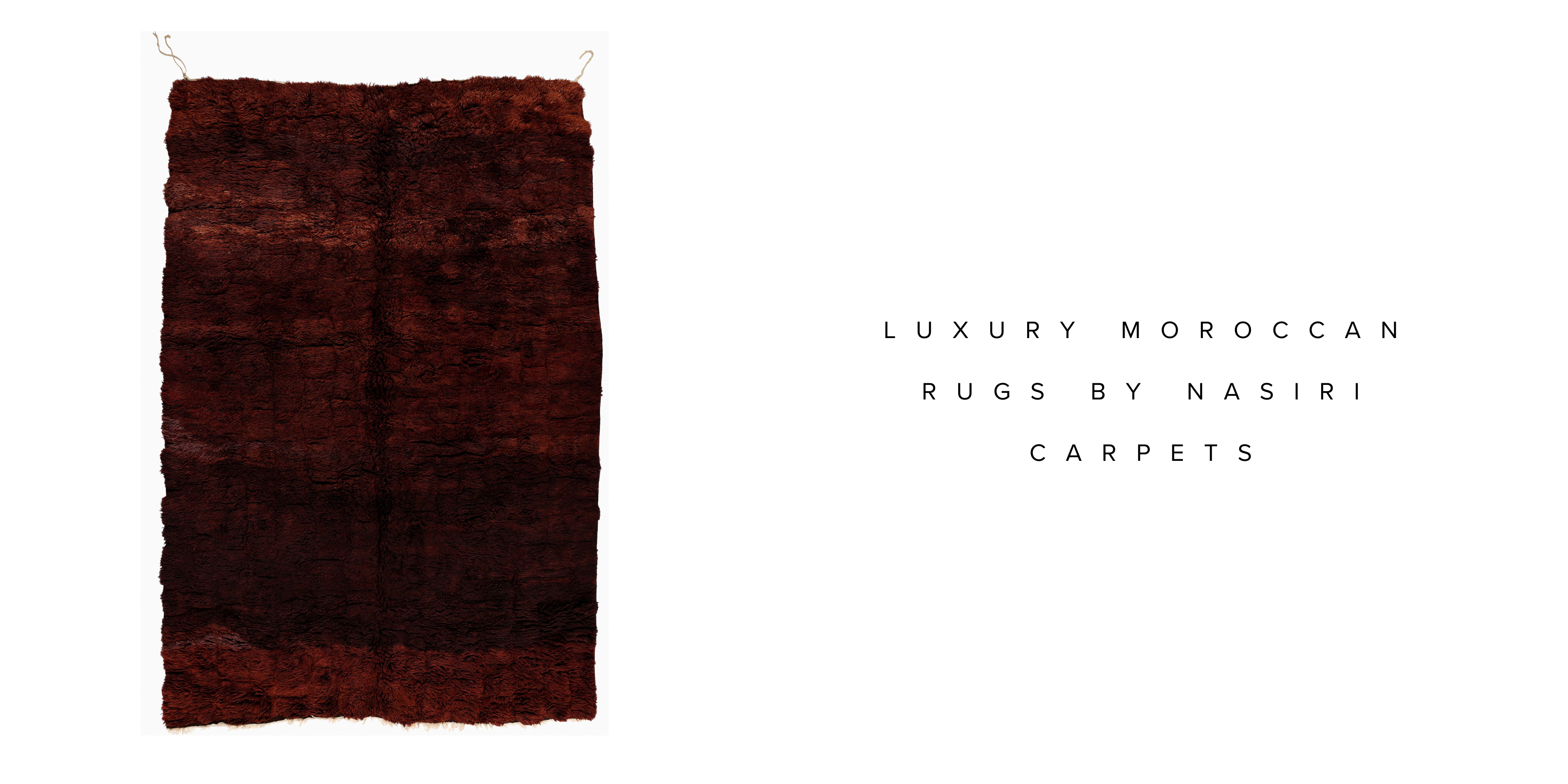
From the historic ateliers of Tehran to the flagship showroom at the New York Design Center (200 Lexington Avenue, Suite 711), NASIRI has served as an essential resource for museum-quality custom flatweaves, masterfully knotted carpets, and vintage textile revivals. This guide delves into the structural craftsmanship, material science, historical typologies, bespoke commissioning cycles, and maintenance standards that define heirloom handmade carpets.
Every handmade rug represents an unbroken dialogue between ancestral craft and contemporary design. While machine-tufted and power-loomed carpets operate on mechanized automation with chemical latex adhesives and petrochemically derived nylon or polyester fibers, handmade rugs are constructed entirely under mechanical tension by master weavers without adhesives or synthetic backings.
A hand-loomed carpet functions as an acoustic dampener, a thermal insulator, and a light-reactive textile installation. Its durability relies on physical knots tied around perpendicular warp threads or interlaced weft passes beaten down tightly on the loom. A well-constructed hand-knotted or flatwoven carpet does not deteriorate over decades; instead, it develops a soft, variegated patina that increases its aesthetic depth and historic value over generations.
Understanding the distinctions among flatweaves, pile hand-knots, and hybrid constructions is critical when specifying floor coverings for high-traffic public corridors, executive boardrooms, or private bedroom sanctuaries.
+--------------------------------------------------------------------------+
|                          WEAVING ARCHITECTURES                           |
+------------------------------------+-------------------------------------+
|             FLATWEAVES             |         HAND-KNOTTED PILE           |
|  - Mazandaran, Kilim, Sumak        |  - Persian (Senneh / Asymmetrical)  |
|  - Warp & weft interlaced directly |  - Turkish (Ghiordes / Symmetrical) |
|  - No pile; low profile; reversible|  - Individual yarn knots tied onto  |
|  - Crisp geometric alignment       |    warp; dense, tactile surface     |
+------------------------------------+-------------------------------------+
Flatweaves contain no upright pile tufts. The structural weft threads interlace directly through the structural warp threads.
Mazandaran Flatweaves: Originating in the remote, forested mountain valleys of northern Iran, Mazandaran textiles represent an extraordinary convergence of ancient folk weaving and twentieth-century minimalism. Characterized by stark, rhythmic horizontal or vertical striping, color blocking, and nuanced tonal striations (abrash), these pieces predated the Western Color Field and Minimalist art movements by centuries. Mazandaran flatweaves feature an ultra-low profile, clean silhouettes, and lightweight flexibility.
Tapestry-Woven Kilims & Shiraz: Using slit-weave techniques where colors shift across discontinuous wefts, Kilims produce razor-sharp geometric borders, diamond cartouches, and tribal emblems. Their crisp structure makes them ideal for contemporary living rooms, layered spaces, and warm, modernist environments.
Sumak (Soumak): A supplementary-weft wrapping technique where decorative yarns wrap around pairs of warp strings before being carried across the reverse. Sumak produces a thicker, ribbed flat surface with superior dimensional stability, exceptional tensile resilience, and higher resistance to shifting under heavy furniture.
Hand-knotting requires looping individual strands of wool or silk around adjacent warp threads and cutting the loop to form an upright tuft, held firm by alternating shots of horizontal wefts beaten down with heavy iron combs.
Symmetrical (Turkish / Ghiordes) Knots: Wrapped around two warp threads with both ends pulled through the center. This produces exceptionally robust structural rigidity and angular, geometric character, frequently seen in Caucasian, Anatolian, and Moroccan tribal pieces.
Asymmetrical (Persian / Senneh) Knots: Looped around one warp and slipped beneath the adjoining warp. This allows for fluid curvature, delicate botanical scrolls, fine curvilinear details, and high knot densities (exceeding 300 to 600 KPSI in classical city carpets).
| Construction Method | Weft/Pile Structure | Pile Height (in.) | Reversibility | Relative Durability | Best Architectural Setting |
| Mazandaran Flatweave | Interlaced Plain Weft | 0.05 – 0.15 | Fully Reversible | Moderate to High | Modern galleries, formal living, dining rooms |
| Sumak Weave | Supplementary Wrapped Weft | 0.15 – 0.25 | Single-Sided (Clean Back) | High | Residential dining, executive suites, entryways |
| Low-Pile Persian Knot | Asymmetrical Knotted Tufts | 0.20 – 0.35 | Single-Sided | Exceptional (100+ yrs) | High-traffic foyers, drawing rooms, boardrooms |
| Moroccan High-Pile (Beni Mrirt) | Symmetrical Knots / Thick Wefts | 0.75 – 1.25 | Single-Sided | Moderate to High | Primary bedrooms, private lounges, screening rooms |
| Gabbeh | Coarse Knot / Heavy Wool | 0.40 – 0.70 | Single-Sided | Very High | Casual family lounges, library spaces, mountain retreats |
The durability and appearance of a luxury carpet depend entirely on the physical characteristics of its raw raw materials.
           [High-Altitude Mountain Sheep]
                         │
         (Seasonal Shearing & Hand-Sorting)
                         │
                 [Hand-Carded Wool]
                         │
                 [Hand-Spun Yarns] ─── (Preserves natural lanolin & irregular twist)
                         │
          [Open-Air Natural Vat Dyeing] ─── (Madder, Indigo, Walnut, Pomegranate)
                         │
                 [The Master Loom]
NASIRI relies on hand-spun, high-altitude sheep wool sourced from mountainous regions. Sheep grazing in colder, high-elevation terrains develop long-staple fleece saturated with natural lanolin.
High Lanolin Content: Lanolin acts as nature’s fluorochemical barrier, repelling liquid spills, dust, and particulate grime naturally without chemical treatments.
Hand-Spinning vs. Machine-Spinning: Machine spinning breaks wool staples and twists them into uniform strands, stripping wool of elasticity. Hand-spinning with drop spindles leaves the natural fibers long and resilient, introducing organic variations in yarn thickness. When dyed, these variations absorb pigment at varying rates, producing subtle tonal movement across the field (abrash).
Commercial dyes coat fibers in a uniform, flat chemical film. In contrast, historical and bespoke artisan carpets utilize natural vegetable, root, and mineral pigments that penetrate deep into the wool fiber:
Madder Root (Rubia tinctorum): Produces terracottas, rusts, crimson, and deep claret reds.
Wild Indigo (Indigofera tinctoria): Imparts navy, cerulean, slate, and peacock blues.
Walnut Husks & Bark: Yields warm umber, tobacco brown, sepia, and charcoal.
Pomegranate Rinds & Weld: Produces ochre, maize, soft saffron, and warm gold.
Natural pigments age gracefully. Exposure to indirect sunlight over decades oxidizes vegetable dyes gently, giving the rug a luminous, mellow luster rather than the dull fading typical of synthetic aniline dyes.
| Fiber Type | Tensile Strength | Lanolin/Natural Oil Content | Stain Resistance | Light Fastness & Aging | Tactile Sensation |
| High-Altitude Handspun Wool | Exceptional | High (Self-protecting) | High | Evolves into soft, luminous abrash | Resilient, springy, grounding |
| Natural Mulberry Silk | Extreme | Negligible | Low to Moderate | High sheen; shifts under directional light | Cool, glossy, exceptionally fine |
| Raw Hand-Spun Cotton | Moderate | None (Used for foundation warp/weft) | Low | Rigid dimensional stability; minimal stretch | Firm, structured interior base |
| Highland Mohair / Goat Hair | Superior | Moderate | Very High | Resistant to crushing and flattening | Coarse, textured, organic warmth |
A finely curated rug bridges traditional craftsmanship with modern architectural spaces.
+─────────────────────────────────────────────────────────────────────────────+
|                         NASIRI COLLECTION TAXONOMY                          |
+─────────────────────────────────────────────────────────────────────────────+
|  MAZANDARAN            MOROCCAN (MRIRT/OURIAN)   MID-CENTURY & CONTEMPORARY  |
|  - Minimalist stripes  - Deep pile luxury        - Abstract color planes     |
|  - Raw sheep wool      - Geometric line work     - Scandinavian influences   |
|  - Neutral & terracotta- Architectural softness  - Controlled geometry       |
+─────────────────────────────────────────────────────────────────────────────+
|  TRADITIONAL REVIVALS  CHARMO & KILIM            ANTIQUE RE-CREATIONS        |
|  - Ziegler Sultanabad  - Reversible flatweaves   - Historical documentation  |
|  - Classical Bakshaish - Natural dye palettes    - Museum-grade provenance   |
|  - Serapi medallions   - Durable, low profile    - Bespoke scaling           |
+─────────────────────────────────────────────────────────────────────────────+
Long preserved in northern Iranian households, Mazandaran flatweaves feature restrained compositions: parallel charcoal stripes against undyed cream wool, subtle gradations of indigo against raw slate, or blocks of burnt terracotta. For contemporary architects and interior designers working in modern vernaculars, Mazandaran textiles function as understated floor art that enhances modern furniture without visual clutter.
Originating in the Atlas Mountains, the Moroccan series balances soft materiality with disciplined geometry:
Beni Ourian: Characterized by un-dyed, plush ivory fields crossed by charcoal or deep brown diamond lattice lines.
Beni Mrirt: Featuring denser knot counts, tighter double-wefts, and a velvety pile that supports rich monochrome fields, warm rusts, sage greens, and abstract brushstroke motifs.
Drawing from Scandinavian textile design (Märta Måås-Fjetterström) and Bauhaus color theories (Johannes Itten, Josef Albers), NASIRI develops custom rugs featuring asymmetrical geometric planes, subtle dimensional carving, and multi-textural combinations of hand-spun wool and flatwoven kilim grounds.
For historically grounded residences, classic Northwest Persian patterns offer regal proportions and grand botanical motifs. Authentic antique pieces in pristine condition are increasingly rare and often come in fixed dimensions that do not fit modern room layouts. NASIRI’s revival program faithfully reinterprets classical designs—including antique Ziegler Sultanabads and geometric Serapis—weaving them to custom dimensions with authentic vegetable dyes and washed finishes that recreate historical character.
For interior designers specifying custom pieces, commission precision is paramount. The journey from design concept to installed floor covering requires rigorous oversight across every stage.
[Phase 1: Concept & Dimensions]
       │
[Phase 2: CAD Rendering & Palette Strike-Off (60-90 Days)]
       │
[Phase 3: Client Approval & Yarn Dyeing]
       │
[Phase 4: Loom Warping & Hand-Weaving (4-7 Months)]
       │
[Phase 5: Off-Loom Shearing, Washes, & Sun-Drying]
       │
[Phase 6: White-Glove Installation & Custom Padding]
The process begins with evaluating room blueprints, elevations, window orientations, and furniture floor plans. Designers specify length, width, cutouts for hearthstones, and structural column notches.
The motif is rendered onto a gridded design graph (carte or digital millimetric CAD), where every individual square represents a single hand-tied knot or weft pass.
Simultaneously, wool and silk pom-poms are dyed to match project color swatches (Pantone, paint chips, or fabric cutouts).
A physical sample—typically measuring 2′ × 3′ or 3′ × 3′—is woven on the assigned loom. This allows the design team to evaluate knot density, pile height, yarn twist, sheared depth, and dye behavior under the client’s project lighting.
Once the strike-off is approved, the full loom is strung with long cotton or wool warp cords under steady tension. A team of master weavers ties knots line by line, working across the loom. Depending on overall square footage and knot density (KPSI), full-scale production takes four to nine months.
After being cut from the loom, the rug undergoes artisanal finishing:
Hand-Shearing: Master finishers trim pile heights with curved hand shears to create a clean, uniform surface or carved architectural reliefs.
Lustral River Wash: The carpet is thoroughly washed with mountain water and organic soaps, then leveled with wooden blades (radla) to align the pile direction.
Open-Air Sun-Curing: Spread beneath open sunlight, the carpet’s dyes cure naturally, yielding soft, stable tones.
Specifying rugs requires aligning pile density and fiber performance with room traffic and functional requirements.
       DINING ROOM                           LIVING ROOM / SALON
  ┌───────────────────────┐                 ┌───────────────────────┐
  │   Low Flatweave/Sumak │                 │ Mid-Pile Hand-Knotted │
  │   + 24-30" chair pull │                 │ Extended front legs   │
  │   back clearance      │                 │ Anchors seating group │
  └───────────────────────┘                 └───────────────────────┘
       FOYER / GALLERY                       PRIMARY BEDROOM
  ┌───────────────────────┐                 ┌───────────────────────┐
  │ High-density knotting │                 │ High-pile Beni Mrirt  │
  │ Dense, low pile       │                 │ Stepping comfort      │
  │ Heavy soil resilience │                 │ Acoustic dampening    │
  └───────────────────────┘                 └───────────────────────┘
Spatial Rule: The rug should anchor the seating arrangement. Ideally, all furniture legs sit on the rug, or at minimum, the front legs of sofas and club chairs extend 8 to 12 inches onto the perimeter.
Weave Recommendation: Mid-pile hand-knotted wool or heavy Sumak. Provides acoustic dampening and tactile comfort while supporting high-traffic social use.
Spatial Rule: The rug must extend at least 24 to 30 inches beyond all sides of the dining table so chairs remain level on the carpet surface even when pulled out.
Weave Recommendation: Mazandaran flatweave, crisp Kilim, or dense, ultra-low pile Persian knot (0.20-inch pile). High-pile rugs impede chair movement and capture food debris, whereas flatweaves allow chair casters and legs to slide smoothly.
Spatial Rule: The rug should extend 24 to 36 inches on either side and past the foot of the bed, framing the sleeping area.
Weave Recommendation: High-pile Moroccan (Beni Mrirt) or plush wool-and-silk blends to prioritize softness, warmth, and sound absorption.
Spatial Rule: Runners should maintain a balanced border of 4 to 6 inches of bare hardwood or stone on both sides.
Weave Recommendation: High-density, short-pile hand-knotted wool (150+ KPSI). Dense upright pile naturally springs back from foot traffic, repelling outdoor dust and moisture.
| Room / Function | Recommended Weave | Ideal Pile Height | Fiber Selection | Underlayment / Rug Pad Specification |
| Formal Living Room | Hand-Knotted Persian/Turkish | 0.25″ – 0.35″ | 100% Hand-Spun Wool | 1/4″ Dense felt & natural rubber dual-surface |
| Formal Dining Room | Mazandaran Flatweave / Sumak | 0.05″ – 0.15″ | Mountain Wool on Cotton Warp | 1/8″ Firm, low-profile rubber-backed grip pad |
| Primary Bedroom | Moroccan Beni Mrirt / Gabbeh | 0.75″ – 1.10″ | Plush Wool (Optional Silk Accents) | 3/8″ High-density felt pad for maximum cushion |
| Grand Foyer / Entry | High-Density Antique Revival | 0.20″ – 0.25″ | Lanolin-Rich Mountain Wool | 1/4″ Non-slip textured rubber-surfaced pad |
| Executive Office | Low-Pile Mid-Century / Kilim | 0.15″ – 0.25″ | Wool with Silk Accents | 1/4″ Dense synthetic/rubber composite |
Handmade wool rugs can last for decades when maintained with proper care. Unlike synthetic carpets that wear down and degrade, high-grade natural fibers age gracefully with basic preventative maintenance.
+─────────────────────────────────────────────────────────────────────────────+
|                        CARE & CONSERVATION PROTOCOLS                        |
+─────────────────────────────────────────────────────────────────────────────+
|  ROUTINE CARE          PERIODIC ROTATION         PROFESSIONAL CARE          |
|  - Suction-only vacuum - Rotate 180° annually    - Full immersion wash      |
|  - No beater bars      - Balances sun exposure   - Every 3-5 years          |
|  - Fast spill blotting - Evens path traffic wear - No dry-cleaning solvents |
+─────────────────────────────────────────────────────────────────────────────+
Vacuum Without Beater Bars: Use suction-only vacuum attachments. Rotating beater brushes can fray hand-spun wool fibers, fuzz fine flatweaves, and unravel delicate selvedge edges.
Fringe Preservation: Never run a vacuum nozzle directly across the cotton fringe edges. The mechanical suction can catch and pull warp ends, unraveling structural end knots.
Blot, Never Scrub: Press a clean, un-dyed cotton towel or lint-free paper towel firmly over spills to absorb liquid. Scrubbing pushes pigment particles deeper into wool shafts and spreads spills outward.
Cold Water Dilution: For spills with natural tannins (wine, coffee), dilute the spot with modest amounts of cold water or sparkling club soda, blotting from the outer edge inward to avoid spreading rings.
Avoid Harsh Detergents: Never apply commercial spot cleaners, carpet shampoos, bleach, or enzyme detergents. These strip the wool's natural lanolin coating and cause vegetable dyes to bleed.
180-Degree Annual Rotation: Rotate the rug 180 degrees every 12 to 18 months to balance foot traffic and normalize natural sunlight exposure across the field.
The Importance of Premium Pads: A high-density felt-and-natural-rubber pad provides essential structural support. It absorbs foot impact, prevents lateral movement, protects structural backing, and stops floor finishes from disfiguring the weave.
Every three to five years, fine handmade carpets should undergo professional cleaning by experienced oriental rug conservators. True conservation cleaning uses flat sub-surface immersion, neutral pH cleansers, gentle rinsing, and temperature-controlled dry rooms. Never send hand-knotted or natural-dyed flatweaves to commercial steam cleaners or dry cleaners using perchloroethylene solvents.
To help explain the investment value of handcrafted textiles to private clients, boards, or project stakeholders, consider the following performance comparison:
| Metric | NASIRI Hand-Knotted & Flatweaves | Mass-Produced Machine-Tufted | Synthetic Power-Loomed |
| Production Cycle | 4 to 9 months of artisan hand labor | 10 to 30 minutes on an automated track | Minutes on an industrial loom |
| Base Materials | High-altitude hand-spun wool, silk, cotton | Low-grade wool, polyester blends | Polypropylene, nylon, polyester |
| Adhesive Usage | Zero adhesives; held by tension knots | Synthetic latex backing glue | Heat-melt plastic resins |
| VOC Emissions | Non-toxic, natural organic fibers | Off-gasses volatile latex & glues | High petrochemical VOCs |
| Design Integrity | Unique abrash, bespoke sizing, hand finish | Uniform, stamped repeat motifs | Flat, computer-printed patterns |
| Structural Lifespan | 50 to 100+ years (Heirloom class) | 3 to 7 years (Delaminates) | 2 to 5 years (Fibers crush & matt) |
| Residual Value | Stable to appreciating antique value | Zero resale value | Zero resale value |
A finely crafted rug anchors an interior space, harmonizing architectural geometry, tactile materiality, and historic art. From the minimalist lines of the Mazandaran Collection to the rich piles of Beni Mrirt and customized recreations of Ziegler Sultanabad masterworks, each piece reflects the hands that spun the wool, mixed the dye vats, and tied each knot.
For interior architects, residential designers, and private collectors, specifying a custom carpet from NASIRI is an investment in architectural character, enduring materials, and traditional craftsmanship.
Talk to a Sales