
Table of Contents
The Truth About What Happens to Mass-Produced Rugs After Five Years
Understanding How Mass-Produced Rugs Are Actually Made
The Craftsmanship Reality: What Separates Hand-Knotted from Machine-Made
The Material Difference: Natural vs. Synthetic
Dye Quality: Natural vs. Chemical
The Hidden Durability: Why Handmade Truly Lasts
The Environmental Reality: Handmade vs. Disposable
The Health Consideration: What You're Actually Standing On
The Cost-Per-Year Reality Check
The Comparison in Real Life: Two Living Rooms
Why NASIRI Handmade Rugs Are Worth the Investment
The Choice Is Yours: Temporary or Timeless
There's a moment that happens in thousands of homes every year that most people don't talk about. It's the moment when someone realizes their "investment" area rug—the one they paid $800 for, the one that looked perfect in the showroom—is beginning to fray. The colors are fading unevenly. The backing is showing through in high-traffic areas. And worst of all, there's nothing to be done about it except replace it.
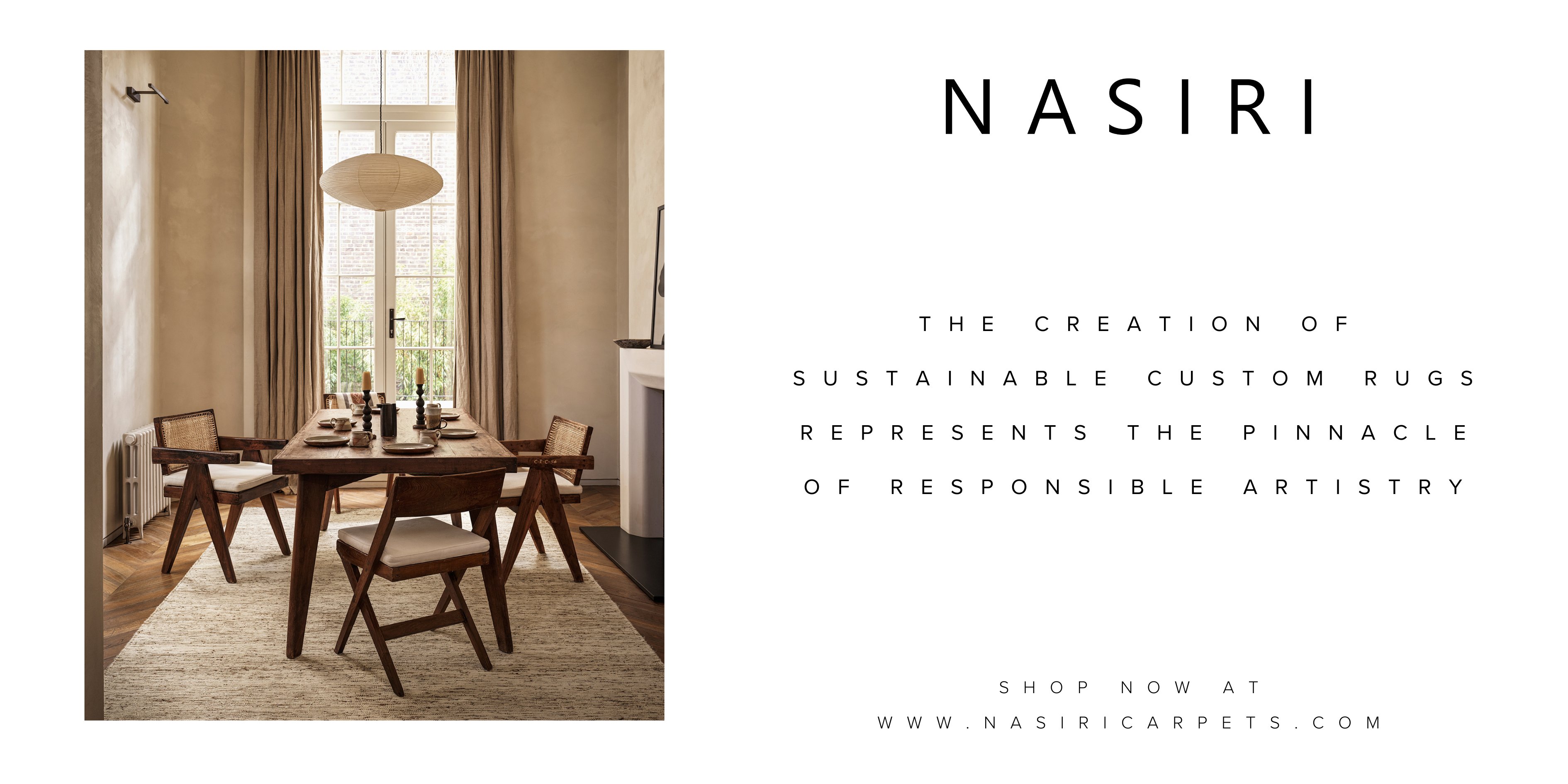
This is what machine-made rugs do. They're engineered for this exact lifecycle. They're designed to look fresh for a specific window of time, then gracefully exit your home so you can buy another one. It's not a bug in the system. It's the entire business model.
Now imagine the opposite. A handmade rug that your grandmother commissioned 50 years ago, that your mother grew up walking across, that your children now play on. It's more beautiful today than it was then. The colors have deepened. The fibers have developed character. It's not aging—it's improving.
This is the fundamental difference between owning a rug and owning something real.
To understand why handmade rugs are so radically different, we need to understand the engineering behind machine-made alternatives. Because they're not just "cheaper." They're constructed on entirely different principles.
A factory-produced rug starts at the power loom. These industrial machines operate at breathtaking speed—thousands of knots per hour compared to a master craftsperson's 3,000 to 8,000 per day. The speed is the entire point. Volume is the goal. Consistency is the metric. Cost-per-unit is everything.
To achieve this speed, manufacturers make specific compromises. They use synthetic fibers—polyester, polypropylene, nylon—because they're cheaper and more consistent than natural materials. They use chemical dyes instead of natural dyes because synthetic dyes are faster and more uniform. They use thin backing materials because thicker backings slow production. They design patterns that repeat perfectly because variation would require human oversight.
The result is a rug that looks uniform, feels predictable, and begins showing signs of wear within 3-5 years. Not because it was poorly made, but because it was designed this way. The rug fulfilled its intended purpose: it looked good long enough for you to use it, then began its transition to obsolescence.
A handmade rug operates on completely different principles. Every knot is tied by a human craftsperson. Quality control happens continuously. If a single knot isn't perfect, the artisan redoes it. If the color variation isn't right, production pauses. The goal isn't speed. The goal is permanence.
Let's be specific about the construction because this is where the magic actually lives.
When you're purchasing a hand-knotted rug, each knot is individually tied around the warp threads. Depending on the knot density, a single square foot might contain 100 to 400+ individual knots. A medium-sized 8x10 handmade rug contains approximately 320,000 to 1.6 million individual knots—every single one tied by hand.
A master craftsperson ties approximately 3,000 to 8,000 knots per day. This means a single rug often requires months of continuous work. An 8x10 rug with a knot count of 100 per square inch requires roughly 80 days of full-time work. That's four months of labor by a skilled artisan.
Compare this to machine production: a power loom can produce an entire 8x10 rug in a few hours. Days of human craftsmanship compressed into machine time.
This isn't a problem with machines. It's just the nature of mechanization. But it means that what you get from a machine is fundamentally different from what you get from a custom rug created by hand.
The difference shows up immediately in durability. A hand-knotted rug lasts 50 to 100+ years. A machine-made rug lasts 5 to 15 years. That's not opinion—that's verifiable data based on rug condition across decades. The difference is in the construction, the materials, and the philosophy behind the creation.
With handmade rugs, the fibers are tied so tightly and so precisely that they don't shift or compress irregularly. Natural materials like wool and silk develop a patina over time that's actually attractive—it shows character rather than wear. The hand-knotted construction means the backing is incredibly strong. Repairs are possible because the entire structure is sound.
With machine-made rugs, the fibers are secured through different mechanical processes that work for a few years, then begin to fail. Synthetic materials don't age gracefully—they fade, fray, and deteriorate. Repairs are often impossible because the entire structure is designed as a disposable unit. You don't repair it. You replace it.
This is where the conversation becomes even more clear. The materials in handmade rugs versus machine-made rugs are fundamentally different.
A quality handmade rug uses premium wool—sourced specifically for fiber length, luster, and durability. Wool fibers have a natural crimp that creates resilience. They bounce back. They don't compress permanently under foot traffic. They're naturally stain-resistant. And they age beautifully, developing richer colors and deeper character over decades.
Natural silk is used for accent details in high-quality custom rugs. Silk reflects light differently than wool, creating visual depth and complexity. But more importantly, silk is incredibly durable. Silk rugs from centuries ago are still intact in museums, still beautiful, still functional.
Cotton is used for structure—the foundation that gives the rug its framework. Natural cotton fibers are strong, stable, and age well.
Now compare to machine-made rugs: polyester, polypropylene, nylon. These are petroleum-derived synthetics designed for cost-effectiveness and production speed. They don't age well. They shed microplastics into your home. They don't breathe. They off-gas chemical compounds. After a few years, they look tired. After a decade, they look disposable.
The difference in material quality is perhaps the most significant factor in longevity. A handmade rug made from natural materials is literally a different product than a machine-made synthetic rug. It's not just higher quality—it's a different category of thing.
Here's something most people don't realize: the dyes used in handmade rugs versus machine-made rugs are completely different.
Machine-made rugs use synthetic chemical dyes specifically engineered for industrial speed and consistency. These dyes are applied rapidly, uniformly, and predictably. The advantage: perfect color consistency. Every inch of the rug is exactly the same color.
The disadvantage: these dyes fade uniformly. After a few years, a bright red becomes a dull pinkish-red. A deep blue becomes a washed-out slate. The colors don't develop character—they just fade.
Handmade rugs created by NASIRI use natural dyes—derived from plants, minerals, insects, and traditional sources. These dyes are applied thoughtfully, with understanding of how they'll interact with natural fibers over time.
Here's the magic: natural dyes age beautifully. A terracotta dyed with natural pigments doesn't fade to a weak peachy tone. Instead, it develops golden undertones, becoming richer and more sophisticated. A deep blue deepens further. A burgundy develops subtle purple undertones.
This is why collectors specifically seek out antique handmade rugs. The colors aren't considered "faded"—they're considered authentic and beautiful. The aging process is part of what makes the rug valuable.
This also means your custom rug literally improves with age. It becomes more beautiful, not less. More valuable, not less. This is the opposite of mass-produced rugs, which depreciate from the moment they leave the factory.
Let's talk about what actually happens over time. Because durability isn't just about materials—it's about construction philosophy.
A hand-knotted rug is built to be repaired. If a section wears, a skilled artisan can carefully retie those knots, restoring the rug to full function. If the backing wears, it can be replaced while preserving the knotted surface. A handmade rug that's been maintained properly can last generations—literally multiple human lifetimes.
We've worked with rugs that are 100+ years old, still in active use, still beautiful. We've restored rugs that were supposedly "beyond saving" that came back to life under expert hands.
A machine-made rug, by contrast, is built as a disposable unit. The backing is thin and integrated. The knots are mechanical and can't be individually retied. Once the synthetic fibers start breaking down, there's no recovery path. You can't restore it. You have to replace it.
Think about the math: a handmade rug that costs $5,000 and lasts 50+ years costs roughly $100 per year. A machine-made rug that costs $1,000 and lasts 10 years costs $100 per year. They're economically identical over time—except the handmade rug is infinitely more beautiful and continues improving with age.
And if you keep the handmade rug for 50 years and then pass it to your children? Suddenly you're talking about $50 per year for a multi-generational heirloom. That's not expensive. That's the definition of value.
Here's something that never gets discussed in the fast-furniture conversation: machine-made rugs are an environmental disaster.
Every 5-10 years, millions of polyester and polypropylene rugs end up in landfills. They don't biodegrade. They break down into microplastics that contaminate soil and water. The petroleum used to create the synthetic fibers contributes to carbon emissions. The chemical dyes pollute waterways during production.
A handmade rug made from natural materials—wool, silk, cotton, jute, hemp—is completely biodegradable. It comes from living things and returns to earth. The natural dyes used in custom rugs are non-toxic and often enhance soil when the rug eventually biodegrades after a century of use.
More importantly, because a handmade rug lasts 50-100+ years, you're not producing 5-10 replacement rugs during that same timeframe. The environmental impact per year of use is dramatically lower.
This is why environmentally conscious consumers increasingly choose custom handmade rugs. It's not just that they're beautiful or durable. It's that they're the right choice for the planet. A bespoke rug is an environmental statement as much as a design statement.
Here's something that matters more than most people realize: what's in your rug affects your home's indoor air quality.
Machine-made rugs using synthetic materials and chemical dyes off-gas volatile organic compounds (VOCs). These are chemicals released into the air from synthetic materials, particularly when new. Studies have shown that homes with extensive synthetic carpeting and rugs have measurably higher VOC levels than homes with natural fiber flooring.
Over time, synthetic rugs also shed microplastics and synthetic fibers into your home's air and dust. Your family literally breathes this. It accumulates in your lungs.
A handmade rug made from natural materials—wool, silk, cotton—doesn't off-gas. It doesn't shed microplastics. It's completely non-toxic. The natural fibers are inert and safe. In fact, wool has natural air-purifying properties. A home with a luxury area rug made from natural materials actually has better air quality than a home with synthetic alternatives.
This is particularly important for families with children or people with respiratory sensitivities. The rug beneath their feet isn't just decorative—it's part of the indoor air quality system.
This is where most people's thinking gets confused. They see a machine-made rug for $1,000 and a custom handmade rug for $5,000 and assume the machine-made option is the smart
financial choice.
Let's actually do the math:
Machine-Made Rug:
Handmade Custom Rug:
But wait—there's more. A handmade rug often appreciates in value. A 40-year-old rug created by master craftspeople is worth more today than when it was created. You're not spending $5,000 and losing it. You're making an investment.
Meanwhile, that $1,000 machine-made rug loses value immediately. After a year, it's worth $200 on the resale market. After 5 years, it's worth nothing except disposal.
The financial argument actually favors handmade rugs. They're not more expensive—they're an investment.
Let me paint two scenarios to make this concrete.
Living Room A features a machine-made rug purchased for $1,200. It looks beautiful for the first three years. Then, around year five, fading becomes noticeable. High-traffic areas show compression. The backing begins showing through near a doorway. It looks tired. At year eight, the owner replaces it with a new machine-made rug for $1,500. Same cycle begins again.
Living Room B features a custom handmade rug commissioned from NASIRI for $6,000. The client invested time in the design process, choosing colors and patterns that reflected their family's aesthetic. In year five, the rug is more beautiful than it was new—the colors have deepened, the pile has developed character. In year twenty, it's still stunning, still perfectly functional. The client decides to commission a second custom rug for another room, creating a cohesive design narrative throughout the home.
Over 30 years: Living Room A owns 4-5 rugs totaling $5,000-$6,000 in replacement costs. Living Room B owns 2 custom rugs totaling $12,000 but has invested in heirlooms that will outlive the homeowner.
Which was the better financial and aesthetic decision? It depends on your values. But the data strongly favors handmade.
Over 30 years, we've become obsessed with one thing: creating custom rugs that outlast, outperform, and outlast everything else.
This means we're willing to spend months on a single rug. We're willing to source the finest wool from specific regions known for fiber quality. We're willing to hand-select every strand of silk for accent details. We're willing to use natural dyes derived from traditional sources even though they're more expensive and less predictable than chemical dyes.
We do this because we're not trying to maximize our short-term profit margin. We're trying to create something that will be beautiful in your home for the rest of your life, and beyond.
When you commission a custom rug from NASIRI, you're getting:
This is why bespoke rugs from NASIRI cost what they cost. Not because we're charging premium prices. But because we're delivering genuinely different products—rugs that are investments in permanence.
You have a choice in front of you, and it's more significant than most purchasing decisions you make.
You can choose the machine-made option: convenience, lower initial cost, uniformity, replacement cycles, environmental waste, disposability. There's nothing wrong with this choice. Millions of people make it. It's just a different philosophy.
Or you can choose custom handmade rugs: investment quality, natural materials, hand-craftsmanship, appreciation over time, environmental responsibility, multi-generational value. This choice says something about your values. It says you're willing to invest in permanent beauty rather than temporary convenience.
The question isn't what you can afford. It's what you value.
If you value beauty that improves with age, quality that outlasts trends, investment that compounds over time, and environmental responsibility—then handmade rugs aren't an expense. They're an essential investment in your home and your future.
Start your handmade rug journey by consulting with our design team. We'll walk you through the process of creating something that will outlast you. We'll help you understand why the craftsmanship matters. And we'll create a custom rug that becomes the foundation of your most beautiful spaces.
Or explore our handmade options and see examples of luxury area rugs we've created that are now 20, 30, 40+ years old—more beautiful today than when they were created.
The forever difference starts with a single decision. Let's create your forever rug.
Talk to a Sales