
A room can have beautiful furniture, expensive lighting, and flawless finishes, yet still feel unresolved. Often, what is missing is not another decorative object. What is missing is a foundation.
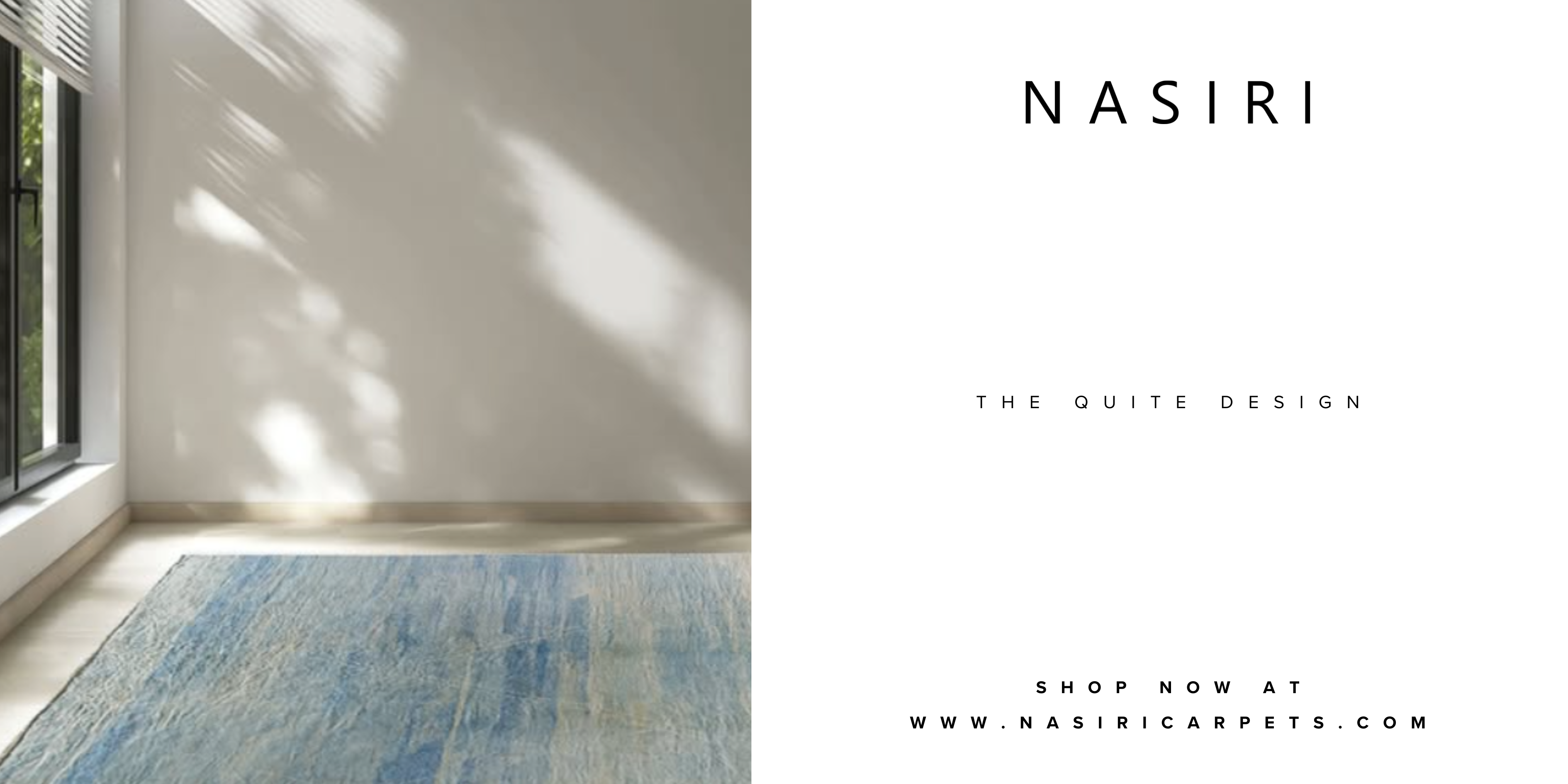
That is where custom rugs make the difference.
Unlike standard rugs, which ask the room to adapt to them, a custom rug is designed to adapt to the room. It responds to scale, architecture, colour, texture, and purpose. It can calm a space, define a seating area, soften acoustics, connect a palette, or become the one element that gives the entire interior its identity.
For homes, studios, hospitality spaces, and commercial environments, custom rugs are no longer a luxury reserved for the final flourish. They are becoming the starting point of serious interior design.
At NASIRI, custom rugs are created with the understanding that every space has a rhythm. Every room has a proportion. Every client has a story. And the most successful interiors are the ones where those three things are woven together with precision.
If you are exploring custom rugs for your own home or project, this guide will help you understand what makes them worth the investment, how to approach the design process, and why a bespoke rug often delivers more value than a ready-made alternative.
Many people begin with a rug as an afterthought. They finish the room, then search for something that “goes with it.” That approach often leads to compromise.
A custom rug changes the sequence.
Instead of trying to force a standard size or pattern into a space, you begin with the room itself. That means the rug can be made to fit the exact dimensions, the exact furniture arrangement, and the exact feeling you want the space to carry.
This is one of the biggest advantages of custom rugs: they are made for a specific purpose rather than a general market. That purpose can be practical, aesthetic, or both.
A custom rug may be used to:
Because the design is tailored, the result feels intentional. There is no awkward border, no strange proportion, and no colour that is “almost” right. Everything is aligned.
For a closer look at the bespoke approach, explore NASIRI’s Custom Rugs page.
The easiest way to understand custom rugs is to compare them with off-the-shelf options.
A standard rug is produced to serve the broadest possible audience. It comes in fixed sizes, predetermined colours, and a limited set of patterns. That makes it convenient, but also restrictive.
A custom rug is built from the ground up for one specific environment. You decide the size, shape, material, structure, palette, and visual language. This creates a level of control that standard retail products cannot match.
That difference matters more than people realise.
In a living room, even a few inches can change the entire feeling of the space. A rug that is too small makes furniture look disconnected. A rug that is too large can overwhelm the room. A custom size solves that problem completely.
The same is true of colour. A rug is often one of the largest visual surfaces in a room. If the tone is wrong, the entire environment feels off. If it is right, the room becomes calmer, richer, and more coherent.
That is why architects, interior designers, and homeowners with a clear vision often prefer custom rugs. They are not buying convenience. They are buying precision.
Luxury is not always about shine. In interiors, luxury is often about control, restraint, and harmony. A well-made custom rug brings all three.
Here is what gives a bespoke rug its luxury feel:
The rug does not look chosen from a catalogue. It looks considered. It belongs.
A formal drawing room may call for silk or a silk blend. A family room may require durable wool. A commercial environment may need a construction that can withstand heavy use while still looking elegant.
Some interiors need strong geometry. Others need quiet texture. Custom rugs allow the design to support the room instead of competing with it.
Handmade rugs carry a depth that machine-made products rarely achieve. The texture, detail, and finish give the room a sense of permanence.
When a rug is tailored to a single project, it gains distinction. It becomes part of the identity of the space rather than just part of the décor.
This is one reason why custom rugs continue to be used in high-end interiors. They offer a visual and tactile experience that feels personal.
To understand NASIRI’s craftsmanship philosophy, visit About NASIRI.
Choosing the right custom rug is less about trends and more about understanding your room.
Before starting the design, ask a few practical questions:
A rug in a bedroom should feel softer and quieter. A rug in a dining area must support chairs and movement. A rug in a reception space may need to create a strong first impression.
The rug should support the layout. In a seating area, it may need to extend under the front legs of sofas and chairs. Under a dining table, it should allow chairs to move in and out without catching on the edge.
Do you want warmth, drama, calm, sophistication, or energy? The answer shapes the rug’s colour, pattern, and texture.
Wool is durable and comfortable. Silk adds sheen and elegance. Blends can provide balance. The right material depends on both the use of the space and the visual effect you want.
Flooring, wall finishes, windows, and ceiling height all matter. A rug should connect with these details, not ignore them.
When these questions are answered properly, the custom rug feels natural in the room. It does not look inserted. It looks inevitable.
If you are ready to discuss a project, contact NASIRI through the Contact page.
One of the strongest advantages of custom rugs is flexibility. The rug can reflect almost any interior direction while still remaining unique.
This style works well in contemporary homes. Soft neutrals, subtle texture, and restrained pattern create calm and balance.
Inspired by natural materials and soft movement, this direction uses warm tones, layered texture, and a relaxed visual language.
For more formal interiors, custom rugs can draw on traditional motifs, border work, medallion structures, and refined palettes.
Some rooms benefit from stronger expression. Geometric forms, contrast colours, and dramatic pattern can turn the rug into the centre of the design.
Custom rugs can also take their cue from paintings, architecture, or personal references. This makes the piece feel more like a commissioned artwork than a furnishing.
Because the design is made from scratch, the rug does not need to follow a template. It can reflect the room’s function, the client’s taste, and the project’s overall story.
For inspiration across styles, you can explore NASIRI collections such as Moroccan Rugs, Persian Rugs, Contemporary Rugs, and Mid-Century Modern Rugs.
People often imagine custom rugs as complicated. In reality, the process is smooth when it is handled properly.
A well-run custom project usually follows a clear sequence:
This is where the project starts. The client shares the room size, photographs, mood references, and practical requirements.
The rug’s visual language is defined. This may include colour family, motif, texture, borders, and overall mood.
Wool, silk, or a blend is selected depending on the final use and desired effect.
This stage ensures the design feels right in the context of the actual room.
The rug is hand-crafted according to the approved design.
Once completed, the rug is finished, inspected, and placed in the space.
At every step, the project becomes more precise. That is the advantage of a bespoke process: the final rug is not guessed at. It is built with intention.
Not every room is a standard rectangle. Many homes and commercial spaces have awkward proportions, unusual corners, wide open areas, or architectural features that make ready-made rugs difficult to use.
This is where custom rugs become invaluable.
A bespoke rug can be made to fit:
Instead of compromising the room, the rug completes it.
This is especially important in luxury interiors, where proportion is central to the design. A custom rug can visually stabilise the room and make it feel more deliberate.
A good rug should do more than look attractive. It should improve the way the space is used.
Custom rugs help in several functional ways:
When a rug is custom-made, these functional benefits are not accidental. They are designed into the piece from the beginning.
That is why custom rugs are often chosen not only for private homes, but also for boutique hotels, offices, and commercial interiors. In those settings, performance matters just as much as appearance.
If you are investing in custom rugs, the maker matters as much as the design.
Look for a company that offers:
A good maker should not simply sell you a product. They should guide you through a creative process.
NASIRI is known for combining craftsmanship with a tailored approach, which is what makes the final piece feel personal rather than mass-produced.
If this blog is being written for ranking, the answer is not just keyword placement. Search engines reward content that helps the reader understand the topic deeply.
A strong page about custom rugs should cover:
This matters because search intent around custom rugs is rarely single-purpose. Some readers want design inspiration. Others want buying advice. Others are looking for a luxury supplier. A useful blog should answer all three.
That is why a detailed, structured article tends to perform better than a short promotional piece. It keeps readers engaged, builds trust, and supports internal linking across the site.
Many rug purchases go wrong for the same few reasons.
This is the most common issue. A rug that is too small can break the room apart visually.
A beautiful rug that cannot handle daily use is a poor choice for a busy room.
The material should match both lifestyle and location.
A rug that clashes with wall colour or flooring can throw off the whole space.
This is the biggest mistake of all. The rug should be part of the design plan, not the final emergency purchase.
Custom rugs solve these issues because they begin with the room, not a shelf.
A custom rug often has a higher upfront cost than a standard rug. That is true. But value is not only measured by price tag.
The real value comes from:
A custom rug can stay in a space for many years and still feel current because it was designed for the room, not a passing trend. That means it has lasting design relevance.
In many cases, the rug becomes the anchor piece around which the rest of the room is built. That level of influence is difficult to place on a standard product.
A room can be attractive without being memorable. What makes it memorable is the feeling that every element belongs.
That is what custom rugs offer.
They bring proportion, texture, warmth, identity, and purpose into one design decision. They help a room function better and feel more complete. They allow interiors to become personal rather than generic.
For anyone creating a space that should feel considered, luxurious, and lasting, a custom rug is one of the smartest design choices available.
And for projects that demand craftsmanship, refinement, and a truly bespoke approach, NASIRI’s custom rug service offers a path from concept to creation with precision.
Talk to a Sales